By Operators, for Americans
This 1-Day Event will be taught and controlled by 144 Operations Group Cadre. Our Cadre are the best of the best and come from all branches of the US Military with Special Operations backgrounds. From US Army Green Berets, and Rangers, to US Navy Special Warfare Units, to Air Force Para-Rescue and Combat Controllers, to Marine Special Operations Command.
144 - The Inferno - Operations Order
Start Date:
Location:
Costs:
TBD early 2027
Bone Valley Range
2771 Cozart Rd, Mulberry, FL 33860
$500.00 *per shooter
1-Day Pistol Intensive Tactical Training
The Inferno is hosted by 144 Operations Group and led by an elite cadre of US Special Operations veterans who bring real-world, combat-proven experience to every block of instruction.
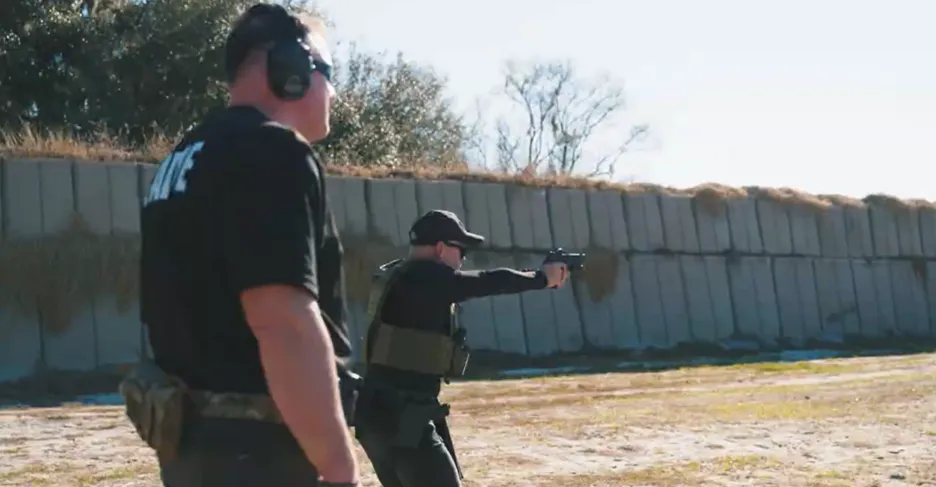
Attendees train with their own pistol through a structured, progressive curriculum built on a Crawl-Walk-Run framework; applied both in concept and on the range. The day opens with weapons handling and static fundamentals, then advances through malfunction drills, multi-target engagements, and live movement under fire. Each skill is developed before it's tested, and tested before it's stacked.
The day culminates with a series of stress shoots designed to measure every attendee's retention and application of the tactics and techniques covered throughout the course. By the end of The Inferno, you won't just know the fundamentals, you'll have proven them under pressure.
The Inferno Overview
Static Pistol Fundamentals
Holster/magazine Fundamentals
Malfunction Drills
Barricade/Covered Shooting
Multi-Target Engagement
Shooting While Moving
Movement with Malfunction Drills
Engagement Stress Event
Static Pistol Fundamentals
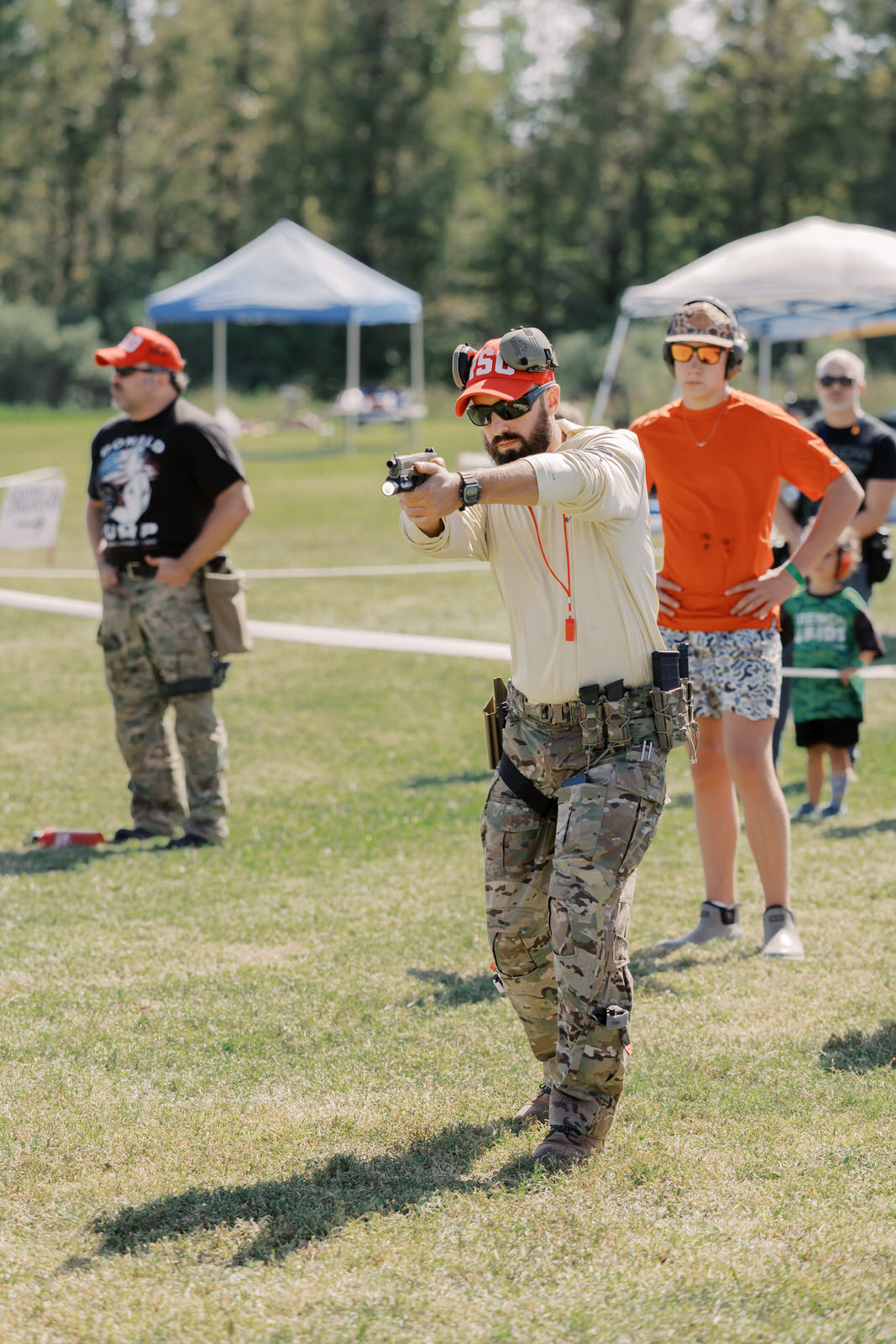
Grip, stance, sight alignment, sight picture, trigger press, and follow-through, executed from a stationary position. Shooters confirm their baseline and lock in the mechanical foundation everything else builds on.
Holster / Magazine Fundamentals
Proper draw stroke from the holster, reholstering under control, and efficient magazine changes, both emergency and tactical. Speed and consistency are developed through repetition with emphasis on safety and repeatability.
Malfunction Drills
Recognition and immediate action for Type 1, 2 and 3malfunctions under low-stress static conditions. Shooters build the muscle memory and diagnostic reflexes needed to restore the gun to battery quickly.
Barricade / Covered Shooting
Engaging targets from behind hard cover and barricades — strong-side, support-side, and kneeling — while minimizing exposure. Shooters learn to use cover properly, avoid flagging the muzzle, and manage their body position for effective shots.
Multi-Target Engagement
Transitioning between multiple threats at varying distances and angles with appropriate speed and accuracy. Emphasis on target prioritization, efficient muzzle movement, and returning to a thorough scan after the string.
Shooting While Moving
Engaging targets while advancing, retreating, and moving laterally. Shooters learn to compress their stride, stabilize the upper body, and maintain sight alignment through the shot, keeping rounds on target without sacrificing footwork.
Movement with Malfunction Drills
Malfunction recognition and clearance integrated into live movement. Shooters must identify a dead gun mid-stride, clear it using correct immediate action, and continue engaging; combining two complex skill sets under mild time pressure.
Engagement Stress Event
A timed, scored evolution that integrates all previous blocks, movement, malfunctions, cover, and multi-target engagements, under induced stress. Designed to expose performance gaps, test decision-making under pressure, and close the day with a measurable benchmark.
144 - The Inferno - Training Timeline
0730 – 0800: Logistics, Check-in & Gear Inspection
Arrival and registration. Individual equipment is vetted for safety and serviceability to ensure all systems are mission-ready before range hot.
0800 – 0830: Safety Brief & Instructor Introduction
Range safety protocols, medical contingencies, and performance expectations. Meet the Special Operations cadre and review the training roadmap.
0830 - 0900: Confirmation of Zero (for those needed)
Shooters verify point of aim/point of impact and weapon function. Identifying mechanical or alignment issues before advancing to core curriculum.
0900 - 1000: Static Fundamentals
The mechanical pillars: grip, stance, sight picture, and trigger control. Establishing the essential foundation for every dynamic block that follows.
1030 – 1130: Malfunction Clearing
Diagnostic reflexes for Type 1, 2, and 3 stoppages. Learning to identify and clear failures instantly to return the pistol to battery.
1130 – 1200: Clearing & Engagement Integration
Immediate action drills executed mid-engagement. Shooters must solve weapon failures while maintaining focus on target tasks under time constraints.
1200 – 1300: Midday Meal (provided by 144 OG)
1300 - 1400: Multiple Threats & Box Drills
Engaging various targets with focus on prioritization and muzzle economy. Box drills integrate footwork with rapid, accurate target transitions.
1400 - 1500: Dynamic & Lateral Movement
Engaging targets while advancing, retreating and traversing. Emphasis on upper body isolation and stabilizing the platform through athletic footwork.
1500 - 1600: Snapshot & Cover Employment
Utilizing barricades for protection while delivering precise fire. Tactics for strong-side, support-side, and kneeling positions from behind hard cover.
1600 - 1700: Final Stress Evolution
The day's benchmark event. A high-tempo course of fire requiring the seamless application of movement, malfunctions, and cover under pressure.
1700 - 1730: AAR & Debrief
Formal After Action Review. Cadre provide individual feedback, identify technical gaps, and outline the path for continued tactical development.